Screen · Series · 2018 to 2022
Killing Eve: the archetype handed to a different woman each year
- Work
- Killing Eve
- Director
- Phoebe Waller-Bridge, who developed it for television; episode directors vary
- Year
- 2018 to 2022
- Kind
- Series
The short version
Killing Eve was developed for television by Phoebe Waller-Bridge from a set of novellas by Luke Jennings, and ran for four series of eight episodes on BBC America and the BBC between 2018 and 2022. Sandra Oh plays Eve Polastri and Jodie Comer plays Villanelle. The structural fact that matters most is the handover: a different woman led the writing each season, Waller-Bridge, then Emerald Fennell, then Suzanne Heathcote, then Laura Neal. The archetype it inherited from the crime cycle of the 1940s was defined by a man narrating a woman in the past tense, and this version removes the narrator entirely and lets the two women look at each other instead.
The femme fatale of the 1940s crime cycle was assembled from three things: an introduction that stopped the film, a lighting scheme that split her face, and a man recalling her in the past tense so the audience knew from the start that this ended badly. The first two are technical. The third decides who the story belongs to.
Killing Eve, developed for television by Phoebe Waller-Bridge from novellas by Luke Jennings and broadcast between 2018 and 2022, keeps the first two and deletes the third.
What the archetype looked like before
The recipe is set out on this site in the femme fatale in film noir, and its most durable component is the narrating voice. She is remembered, judged and summarised by a man who was involved, and because she never gets the voiceover she never gets to correct him. The Production Code then required an ending that stopped her.
Take the narrator away and the machinery has to be rebuilt. Somebody still has to be interested enough in her to organise a story, and in this series the interested party is Eve Polastri, played by Sandra Oh, an intelligence investigator whose attention becomes the engine of the plot. Jodie Comer plays Villanelle, and Fiona Shaw plays Carolyn Martens, the intelligence officer senior to Eve, which means the three positions that matter are all held by women and none of them is narrating.
The result is a version of the archetype where the interpretation is contested inside the show. Nobody is telling the audience what she is.
The handover
The production fact worth stating precisely is the succession of head writers. Waller-Bridge led the first season, Emerald Fennell the second, Suzanne Heathcote the third and Laura Neal the fourth, and the network described the arrangement in exactly those terms when it announced the last of them.
Being precise matters here because the shorthand that grew around it is looser than the record. The first season employed male writers and all three of its directors were men. What was consistent across four years was that a woman held the pen on the scripts and that the pen changed hands, which is rare enough on its own without inflating it.
Heathcote has been explicit about what the arrangement was for, arguing on the record that decades of film and television organised around a male viewpoint had left female characters incompletely drawn, and that her own writing room was entirely female. Whether four different authors produce a coherent character over thirty-two episodes is a separate question, and the show is genuinely uneven. The point is that the unevenness comes from four women disagreeing rather than from one man deciding.
Clothes as a reward rather than a display
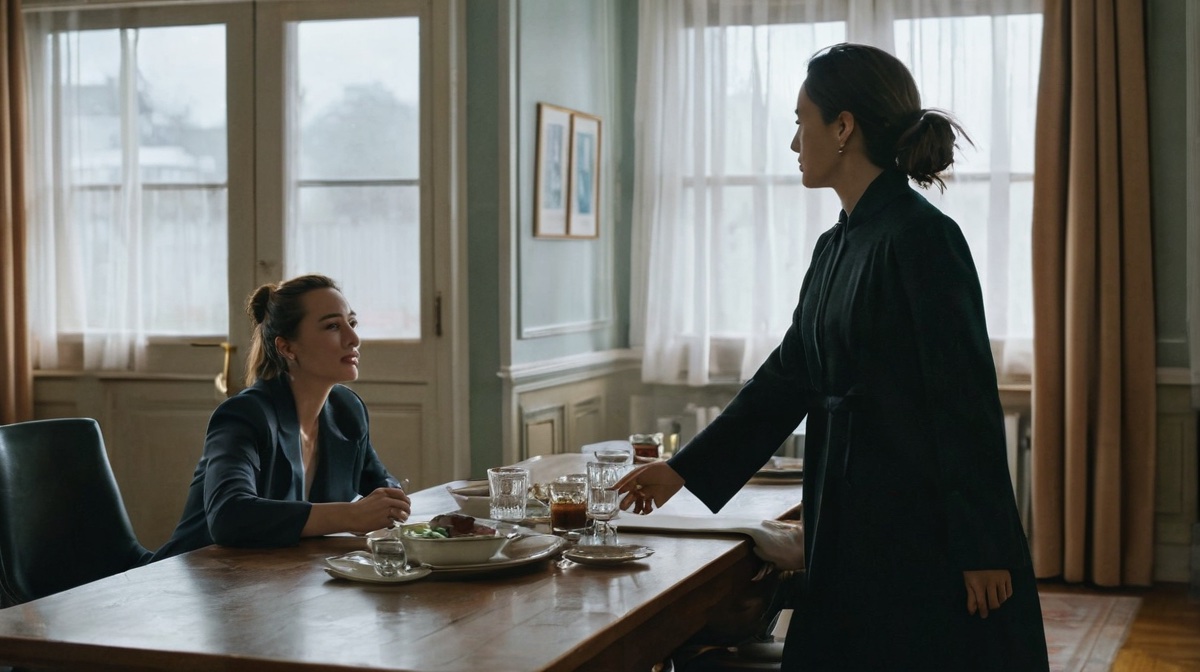
Costume in this series is doing the work that props do in the printed tradition, and it is doing it deliberately. Phoebe de Gaye designed the first season, and her account of the character’s wardrobe is that the clothes are something Villanelle gives herself rather than something arranged for anyone to look at.
The garment everyone reaches for is a pink tulle dress by Molly Goddard, from an existing collection rather than made for the production, worn in the second episode and later put on display in an exhibition about screen craft. De Gaye has described it as the character putting two fingers up at the world, and the reading holds: it is enormous, impractical, worn with heavy boots, and entirely unsuited to being looked at approvingly.
That distinction between address and display is the same one worked through in looking at the camera. A costume arranged to be approved of organises everything toward the viewer. A costume worn for the wearer leaves the viewer to catch up. The series also changed costume designer from season to season, alongside the writers, which gave each year a visibly different wardrobe logic rather than a house style.
The bathroom mirror
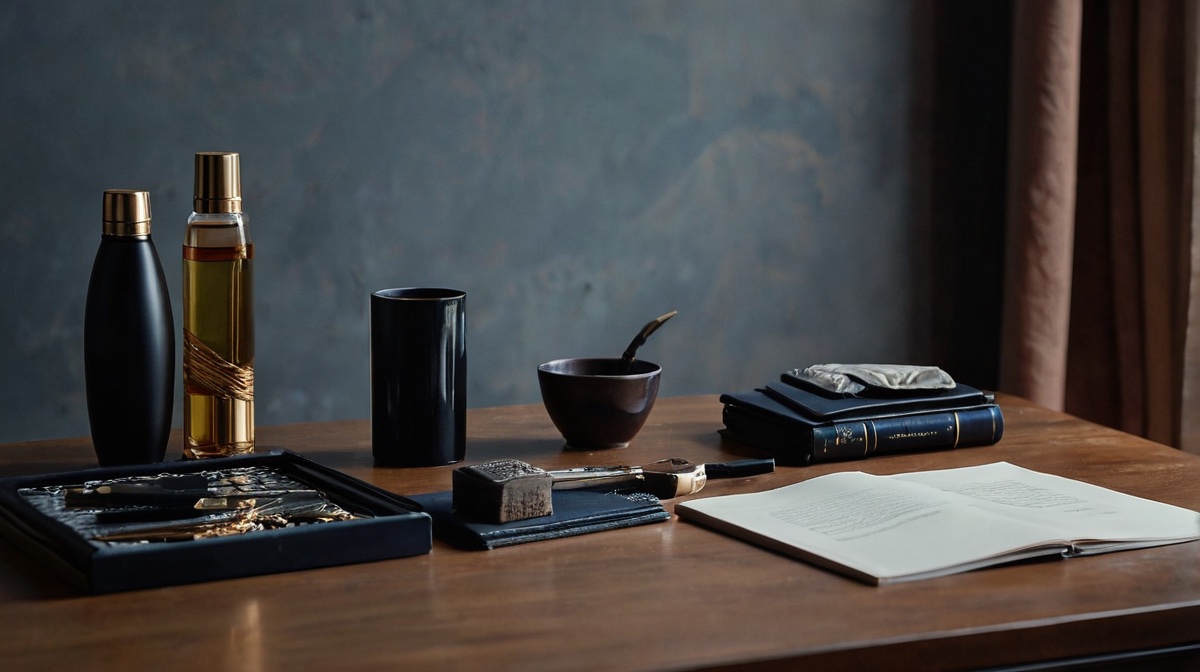
The formal statement arrives early, in the first season, when the two women end up in the same bathroom and watch each other in the glass rather than turning round.
Everything about that arrangement is deliberate. Neither is looking at herself, which removes the vanity reading. Neither is looking directly at the other, which would resolve into a confrontation. Each is watching a reflection, which means each knows she is visible and each can pretend she is not, and the exchange stays unfinished for as long as it lasts.
It is the device examined in the mirror, used at full strength and with both parties aware of it. In the painted tradition the glass gives one figure an advantage the other does not know about. Here both have it simultaneously, which is a considerably stranger arrangement and the closest thing the series has to a thesis about what these two are to each other.
What it did not settle
The archetype came with a punishment ending because a censorship office required one, and that requirement disappeared in 1968. Nothing compelled this series to arrive anywhere in particular, and four writers in succession meant four ideas about where it was going. Where a story of this kind ends is a choice here rather than a condition of release, which is a change in the machinery whatever anyone makes of the result.
The awards record is worth stating because it is checkable. Comer won a Primetime Emmy for lead actress in a drama series in 2019, beating her co-star, and a BAFTA television award in the same year. Oh won a Golden Globe and a Screen Actors Guild award in early 2019 and was nominated for the Emmy three times without winning it.
What the series demonstrates is narrower than the claims made for it and more useful. The visual grammar of the fatal woman survived being detached from the male narrator that invented it. The entrances still work, the clothes still work, and the danger still reads. What changes is that the picture is no longer being explained to you by somebody who was there.
Questions readers ask
Was Killing Eve made by an all-female team?
Not in the way the phrase is usually repeated. The head-writer role passed between four women across four seasons, which is documented and unusual, and the third season writing room was described by its lead writer as entirely female. The first season was not: two men wrote episodes and all three of its directors were men. The accurate claim is that authorship of the scripts was consistently held by women, not that the whole production was.
Where does Villanelle sit in relation to the film noir femme fatale?
She inherits the entrance and the clothes and loses the frame. In the 1940s cycle the fatal woman was introduced by a held shot, lit to look duplicitous, and described by a male narrator who had already decided what she was. Villanelle gets the entrances and the wardrobe with the narration stripped out, and the person paying her the closest attention across four seasons is another woman.
The lens was pointed by somebody
A film can only record an arrangement that a group of people worked out first, usually on paper, usually in a room. That part never appears in the credits.
See where it happens now