Motif · Setting
The boudoir
The short version
The boudoir is the one setting that does the work before anyone poses. In the domestic plan it came from, it is a private sitting room belonging to the woman of the house, entered by permission, which makes any man in the frame a guest rather than a caller or a participant. It is also the only interior in this genre permitted to be cluttered, and the clutter functions as evidence of a life that was going on before the visitor arrived. The word has since been taken over by a commercial photographic style built on softness, and the older meaning has to be recovered against it.
Most of the interiors in this genre are notional. A wall edge, a floor line, sometimes a curtain, and the rest left blank because paper was expensive and deadlines were short. The boudoir is the exception, and it is worth asking why one particular room got drawn properly when none of the others did.
Part of the answer is that it is the only room in the traditional domestic plan that comes with a ready-made argument about who is in charge of it.
A room that belongs to somebody
The word arrives from French, where the room is a small private sitting chamber attached to a bedroom and belonging to the woman of the house. Its name derives from a verb meaning to sulk, which tells you what it was understood to be for: somewhere to withdraw to. It is not a public room and it is not a shared one. Entry is by invitation.
Set a scene in a drawing room and both figures have equal standing, because a drawing room is where a household receives. Set it in a bedroom and the scene has already announced what it is about. Set it in a boudoir and the man in the frame is somewhere he has been allowed to be, temporarily, at somebody’s discretion. No pose is required to establish that. The room has done it.
This is a rare piece of good fortune for a genre that otherwise has to state everything explicitly. Height, props, sightlines and blocking all exist to make a claim that the architecture here simply supplies. It also means the room tolerates a much quieter arrangement than the empty-background material can manage, because the composition is not carrying the whole load.
The visitor is the one out of place
The consequence for blocking is specific and it shows up throughout the printed record. In boudoir scenes the second figure is placed badly on purpose.
He stands when there is a chair. He is near the door rather than in the room. He holds his hat. He is dressed for outdoors while she is not, which is the neatest inversion available: in almost every other setting in the genre she is the one in coat and boots and he is the one stripped of context. Here their positions swap and the meaning holds anyway, because the room has taken over the job the costume was doing.
The strongest versions push it further and remove him from the picture entirely. A boudoir with one figure in it and a second chair pulled out, a coat over the arm of it, two cups on the table, produces a scene in which somebody is being waited for or has just been dismissed. The genre almost never manages an absence that legible, and the room is why.
The only interior allowed to be full
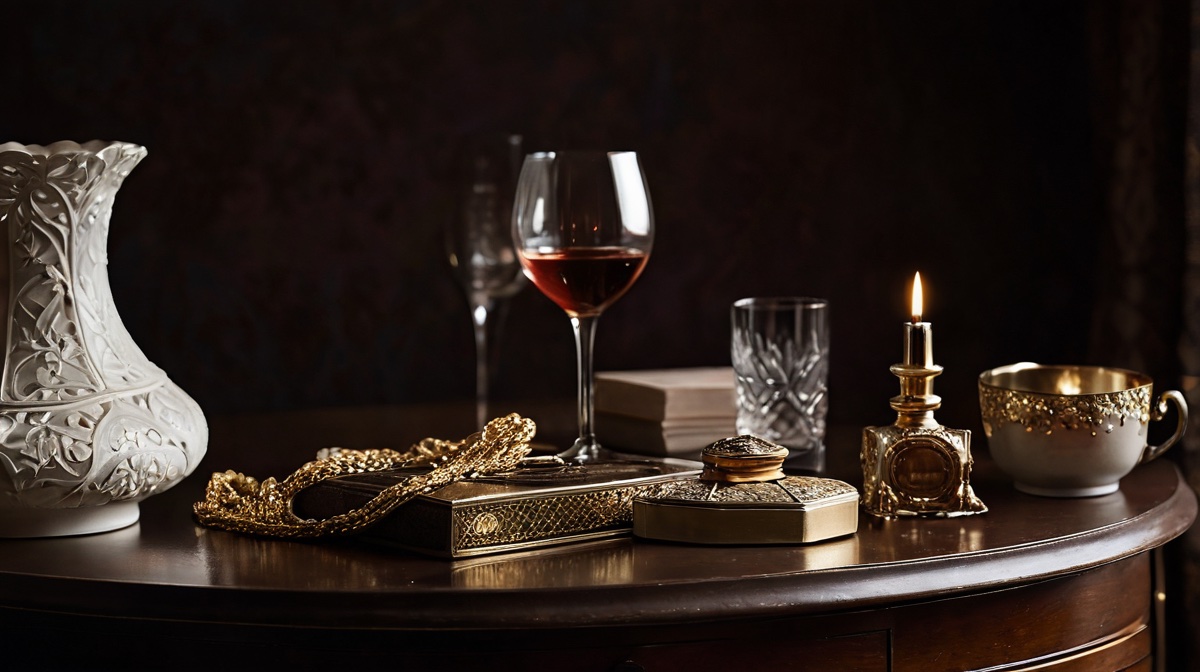
Everywhere else in this vocabulary, objects are rationed. The empty background is close to a rule, and the drawing room plate on this site was made partly to test how little a room can contain and still be a room. The answer turned out to be very little.
The boudoir suspends the rule. It is drawn with a dressing table, bottles, brushes, a mirror, textiles, a screen, letters, a chair with something thrown over it. The clutter is not decoration. It is chronology. Every object in the frame is evidence of something done earlier by somebody who was not thinking about the viewer, and the accumulated effect is that the scene has a past.
That is the one thing an empty background can never provide. An empty room begins when the picture begins. A cluttered one was already running.
The mirror deserves separate treatment and gets it in the mirror, because it does something no other object in the room does: it looks back, and it puts a second version of the figure into a composition that has otherwise been carefully controlled.
What commercial soft focus did to the word
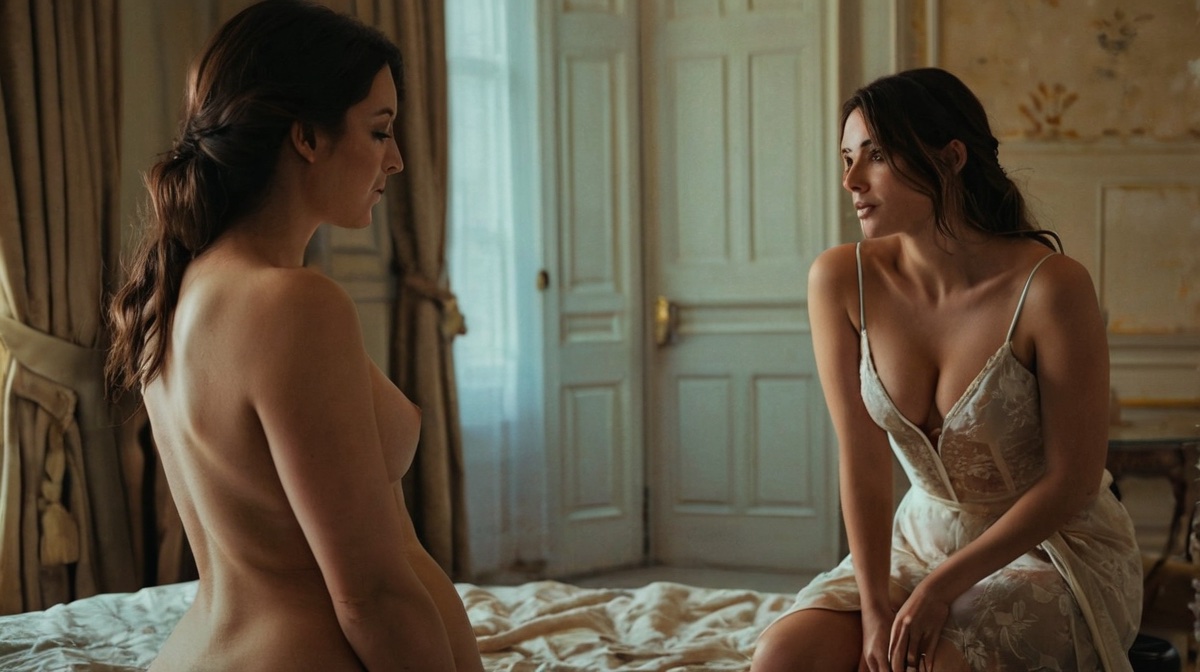
Anyone searching the term now will mostly find a portrait genre: a client, a hotel room, a long lens, diffusion on the light, and a treatment designed to flatter. That practice has a long history of its own and no quarrel with it is intended here. But it has effectively captured the vocabulary, and the older setting now has to be described against it.
The two point in opposite directions. Commercial boudoir photography softens: the light wraps, the edges dissolve, the subject is presented for approval. The setting this page is about hardens: the room asserts ownership, the visitor is at a disadvantage, and approval is not the transaction on offer. A picture that uses the room and the soft treatment together generally ends up with neither, because the light keeps apologising for the architecture.
The historical material is unambiguous on this point. The postcard and print tradition put its boudoir figures in hard graphic light with strong tonal separation, for reasons of reproduction as much as taste, and the room reads as a domain rather than a set.
The doorway
The single most efficient composition the setting offers is a threshold. She is inside and seated. He is in the doorway, half in shadow, not yet across it.
The frame within the frame does the geometry, the light change does the tonal work, and the arrangement makes visible the one thing the room was always about, which is that somebody decides who comes in. It is also a pose that requires nothing of either figure. Both can be entirely still, fully clothed, and doing nothing at all, and the picture will still be about permission.
Questions readers ask
What is the difference between a boudoir and a bedroom in these pictures?
Function and access. A bedroom is where something is expected to happen, so a figure placed in one is already read as available and the composition has to fight that. A boudoir is a sitting room: it contains chairs, a writing surface, a dressing table and a mirror, and the activities it implies are reading, dressing, correspondence and waiting. Nothing is owed to anyone in it. That is a much better starting position for a picture about authority.
Is boudoir photography the same tradition?
No, and conflating them causes most of the confusion around the term. Commercial boudoir photography is a twentieth-century portrait genre defined by soft light, shallow focus and flattering treatment of a paying client, and its whole vocabulary points toward softness. The setting discussed here predates it by well over a century and points the other way. They share a word and almost nothing else.
Reading a sign is half of it
Every motif on this site records something two people agreed to do before anyone drew it. The drawing is the easy part.
See where it happens now