to 1945 · Before the magazines
From postcards to print: the figure before the magazines
The short version
Before the fetish magazines there was no market category, only a type that kept surfacing inside other kinds of printed matter. The postcard trade, photographs of stage performers, the cruel beauty of decadent illustration and the boot and corset advertising of the mail-order catalogues each supplied a piece of the figure. She was assembled out of respectable and semi-respectable material long before anyone printed a magazine about her.
The dominant woman did not arrive with the fetish magazines. She had been circulating for at least half a century by then, in fragments, inside printed matter that was sold for other reasons. There was no category to buy her under and no publisher addressing the taste directly. What existed instead was a scatter of adjacent trades, each supplying a component, and an audience quietly assembling the figure for itself.
That assembly is easier to see in hindsight than it can possibly have been at the time. A person in 1905 was not collecting a genre. They were buying a postcard, a theatre photograph, a fashion plate or a catalogue, and keeping the ones that did something for them.
The postcard trade
The picture postcard boom around the turn of the twentieth century put cheap printed images into ordinary hands at an unprecedented rate, and a substantial part of that trade was mildly risque. Cards showing women undressing, posing in underwear or acting out small domestic scenes sold in enormous quantity, mostly manufactured in France and mostly bought under a light fiction of artistic study.
The suggestive cards matter here less for their nudity than for their staging. They are tiny theatrical scenes with a fixed cast, and one recurring arrangement puts a woman in charge of the situation: standing while a man kneels, holding an object he is being made to look at, or turning away from him with obvious indifference. These are jokes as often as they are anything else, and the humour is what let them be sold. A card that presents a reversal as comic can be posted openly. The image still teaches the eye the composition.
Hand tinting adds a further layer. Colour was applied over the print by hand, unevenly, usually to a few chosen elements, and the choice of what to tint is telling. Lips, stockings and boots get the colour. Everything else is left in monochrome, which concentrates attention exactly where the trade knew it belonged.
Actresses, tamers and the stage
Photographs of stage performers were a legitimate business with an enormous audience, and they carried a great deal that could not have been sold on its own. Costume did the work. An actress photographed in character could hold a crop, wear boots above the knee, stand over a seated man or fix the camera with a level stare, and the resulting card was a theatrical souvenir rather than anything else.
The circus and the music hall supplied their own versions. The animal tamer, whip in hand and dressed in a military-styled tunic and high boots, was a stock publicity image with a very long life, and the equestrienne in a riding habit was another. Both were entirely respectable and both are unmistakably part of the ancestry of this imagery. The whip was a tool, the boots were practical, and the pose was a professional necessity. That is precisely why the picture could be printed.
Cruel beauty as a stock type

Illustration and painting of the Belle Epoque had its own version of the figure, and it was rarely comic. The decadent and symbolist strain of the period was full of women depicted as remote, ornamental and dangerous: enthroned, crowned, jewelled, indifferent, often accompanied by a defeated or diminished male figure somewhere in the lower part of the composition.
This material was made for galleries, salons and illustrated magazines, and it came with a full set of respectable alibis in myth and allegory. What it contributed to the later vocabulary is not a prop but a posture: the seated woman who does not need to move, whose authority is expressed through stillness, elevation and the refusal to look at anyone in particular. The magazines of the 1950s inherited that pose almost intact, stripped of the mythology and given a pair of boots. Its logic is the subject of who is standing.
Corsets, boots and the catalogue that did not mean it
The most widely circulated images of this kind were commercial, and the businesses producing them had no interest in eroticism at all. Corsetry advertising had to show the garment, which meant showing the silhouette it produced, and mail-order catalogues put those illustrations into millions of homes. Boot and shoe advertising did the same for the leg.
None of this was intended to do what it did. The advertising drawing is technical, its purpose is to show construction, lacing and fit, and its precision is exactly what made it useful to a reader with other interests. There is also documentary evidence of the audience recognising itself. In the 1860s a mainstream British domestic magazine found its correspondence pages taken over by a long, strange and possibly half-invented argument about tight lacing and discipline, conducted at length by readers, which is the same mechanism the fetish magazines would run on a century later. The letters column found the subject before any publisher went looking for it.
Circulating before there was a category
Genuinely explicit material existed throughout this period, printed privately and sold quietly, and very little of it survives in a form anyone can describe with confidence. Claims about print runs and prices in that market should be treated with suspicion, because the trade kept no records anyone would want to keep.
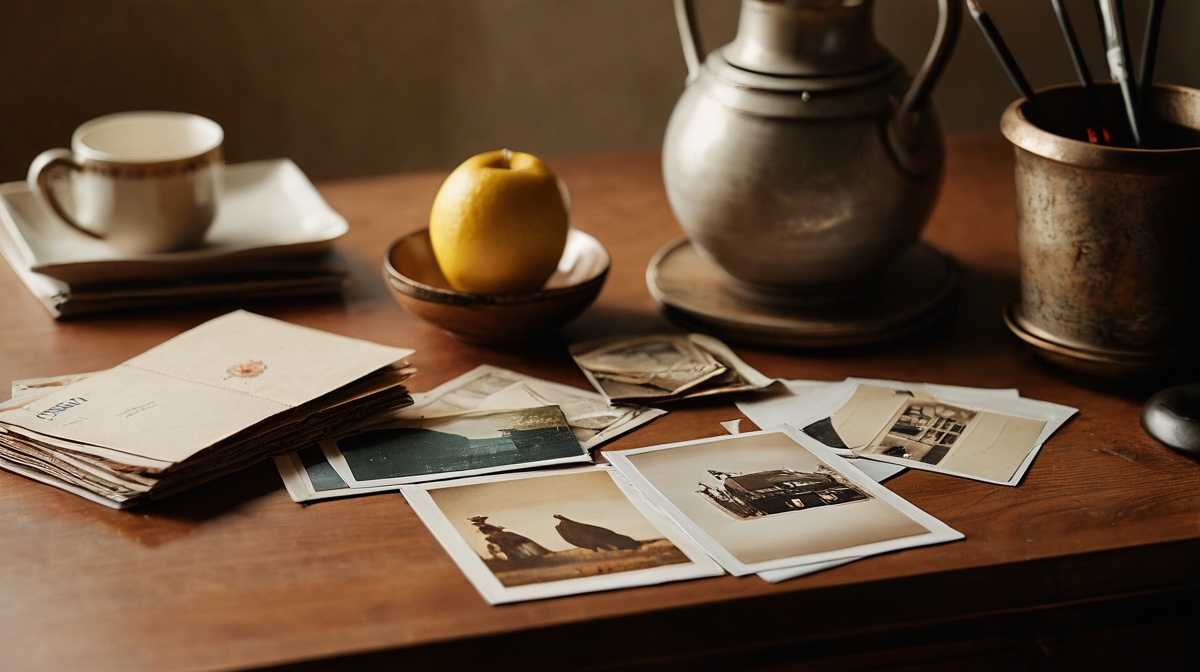
What can be said is that by the 1930s every component was in place and in circulation. The costume, the props, the postures, the tinting conventions and even the reader correspondence loop had all appeared somewhere, in material sold as comedy, as theatre, as fine art or as underwear. Nobody had yet put them in one place and posted it out monthly. That is what happens next, in the magazine era, and the plates include one made in the manner of a hand-tinted postcard to see what the format could carry.
Questions readers ask
Was there a market for this imagery before the 1940s?
Not a named one. There were adjacent trades that carried pieces of it: the postcard business, theatrical photography, the underground print market, and advertising for corsetry and footwear. Buyers assembled a taste out of material sold for other reasons, and the print runs that survive tell us almost nothing reliable about how many people were doing it.
Why do so many early images use the theatre as an alibi?
Because a costume explains a pose. A stage performer photographed in character could hold a whip, wear boots to the thigh or look straight down the lens, and the picture stayed inside what a photographer could sell and a customer could keep on a shelf. The alibi shaped the imagery, which is why so much of the early material looks like a scene from a play nobody wrote.
The magazines folded, the arrangements did not
Everything on this page began with people working out what they wanted and how much of it a picture could carry. That part is still going on, and not in print.
See where it happens now