Makers · Film · 1970s to present
Women directing and shooting the genre: where the camera stands
- Person
- Women directing and shooting the genre
- Active
- 1970s to present
- Known for
- The shift when the person making the image is a woman
- Field
- Film
The short version
When women filmmakers take on the femme fatale and the dominant woman, the most reliable change is not in the plot but in where the camera stands and how long it stays there. The figure was assembled by men working for a market of men, and the resulting grammar assumes a particular viewer. A different person behind the camera does not automatically produce a different picture, but it removes the assumption, which is why the small documented body of work by women in this territory is disproportionately interesting. That body is small partly because of who got hired.
The dominant woman as a picture was built almost entirely by men, for a market of men, over about a century. That is a statement about employment and distribution rather than a complaint. Postcard studios, small-press magazine publishers, fashion titles and film studios all hired the way their industries hired, and the visual grammar that came out the other end has a particular viewer built into it. Watching what happens when someone else operates that grammar is one of the more useful things a site like this one can do.
The honest starting point is that the record is thin, and that its thinness is itself a finding.
What actually changes
The differences show up in three technical places rather than in subject matter.
The first is vantage point. The inherited convention places the lens slightly below a standing woman, which makes her tall and makes the viewer small. That arrangement is completely standard in the printed tradition, as who is standing sets out, and it carried straight into film. Move the camera to her eye level and the same body reads as competent rather than looming. Neither position is more truthful. They are different arguments and the choice usually gets made without discussion.
The second is duration. A held shot that presents a figure to the audience does a different job from a held shot that watches a figure working something out. The lengths can be identical. What differs is whether the camera is offering or observing, and audiences detect that distinction reliably even when they cannot name it.
The third is what falls outside the frame. Conventional treatments of this material cut away from the administrative, procedural and dull parts. Keeping them in changes the subject from spectacle to occupation, which is exactly the move Maîtresse makes with a male director, showing that authorship is not the only variable that matters.
Two cases on the record
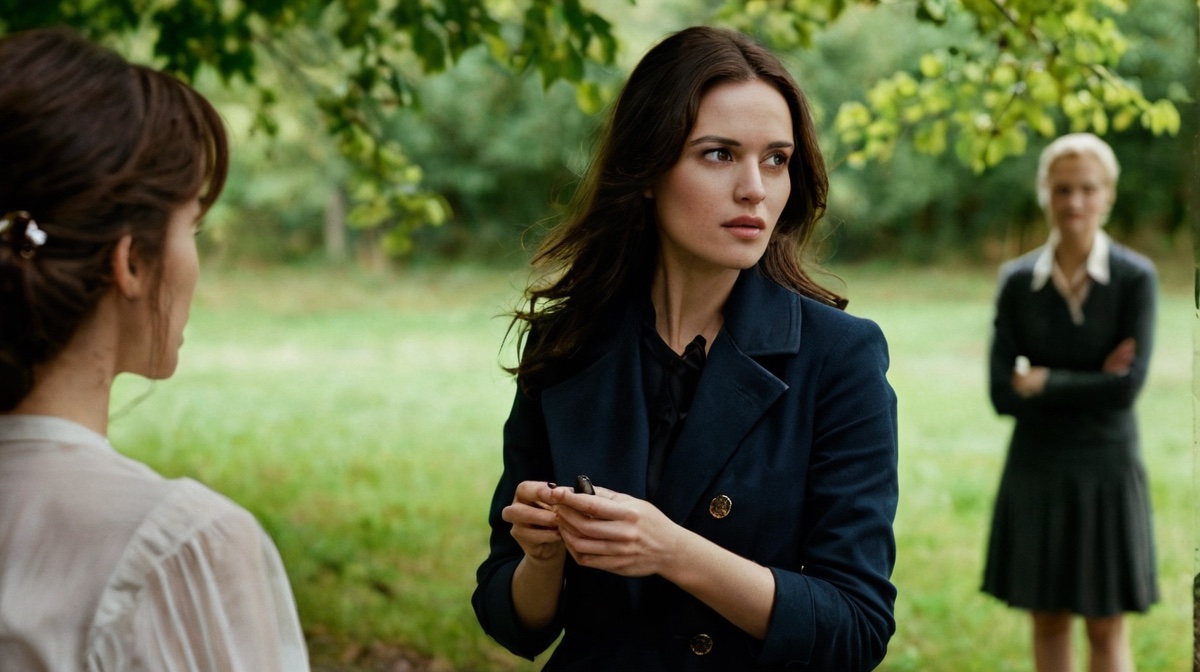
Liliana Cavani directed The Night Porter in 1974, with Dirk Bogarde and Charlotte Rampling, over the course of a long career in Italian film and television. The film is among the most contested in European cinema. One line of criticism holds that it aestheticises Nazism and turns the camps into a setting for erotic drama. Another holds that it is a serious study of coercion, complicity and the bonds that survive atrocity, and that its refusal to comfort the viewer is the point. Both positions have been argued by serious critics since the year it was released and neither has prevailed. What is not in dispute is that a woman directed one of the period’s most argued-about films about power between a man and a woman, at a time when very few women were directing features at all.
The Wachowskis made Bound in 1996. They were credited under their earlier names then and are now known as Lana and Lilly Wachowski. The film takes the femme fatale, a role constructed entirely around a male mark, and reassigns it so that the woman performing the routine and the woman being followed by the audience are on the same side. The camerawork is where that decision becomes visible: the introductions are still held, but the position they are held from keeps moving.
Why the record is thin
Counts of directing credits on high-budget features have repeatedly found women a small minority, and the figures behind the camera in cinematography have historically been smaller again. That alone would explain a sparse filmography in any genre.
The adjacent trades make it worse. In magazine and studio photography, the crediting convention gave a line to the photographer and to nobody else. Models, stylists, printers, retouchers and picture editors shaped the finished image and left no signature, and a large proportion of them were women. The same is true of the mail-order magazine economy, where the correspondence pages effectively commissioned the artwork and the correspondents are anonymous. The archive of who made these pictures is not neutral. It records the job titles the industry chose to credit.
This is why a page about Helmut Newton can be written from a rich public record and a page about the people who built the image alongside him cannot. The absence is structural, and treating it as evidence that women were not involved would be a straightforward error.
Reading the gap without inventing anything
The temptation with a thin record is to fill it, and this site does not. No names appear on this page that cannot be checked in ordinary published sources, and no contribution is assigned to anyone on the basis of plausibility.
What can be said is that the grammar of this genre was formed under specific employment conditions, that those conditions have changed slowly, and that the small number of documented cases show the conventions to be far more negotiable than a century of repetition suggests. Where the camera stands was never a technical necessity. It was a habit with an audience attached.
Questions readers ask
Does a woman directing automatically change what the picture means?
No, and claiming otherwise would be a poor argument. Genre conventions are strong, commissioning bodies have expectations, and a director of any background can reproduce an inherited grammar without examining it. What changes is that the grammar stops being invisible. Once the assumed viewer is no longer taken for granted, decisions about vantage point and duration become choices rather than defaults, and choices can be read.
Why is the record of women in this territory so thin?
Two reasons compound. Studies that count directing credits on high-budget features have repeatedly found women a small minority of the total, and the share behind the camera in cinematography has historically been smaller still. On top of that, the adjacent print and photographic trades credited very few of the women who worked in them at all, so contributions by models, editors, retouchers and correspondents left no signature to recover.
Is this a page about representation or about craft?
Craft, which is why it sits in the makers section rather than a commentary column. The subject is vantage point, duration and blocking: where the lens is placed relative to a body, how long a shot is held, whether a figure is presented to the audience or observed by it. Those are technical decisions with meanings attached, and they are the level at which any change in authorship actually shows up.
The picture was a job before it was a style
Everyone on this page was working from a brief, and the brief came from what an audience kept asking for. The asking has not stopped.
See where it happens now